Tag: Migration

  • Climate Change and Migration: Climate Change Induced Migration in International Law and the Human Right to a Sustainable Environment

    Climate Change and Migration: Climate Change Induced Migration in International Law and the Human Right to a Sustainable Environment

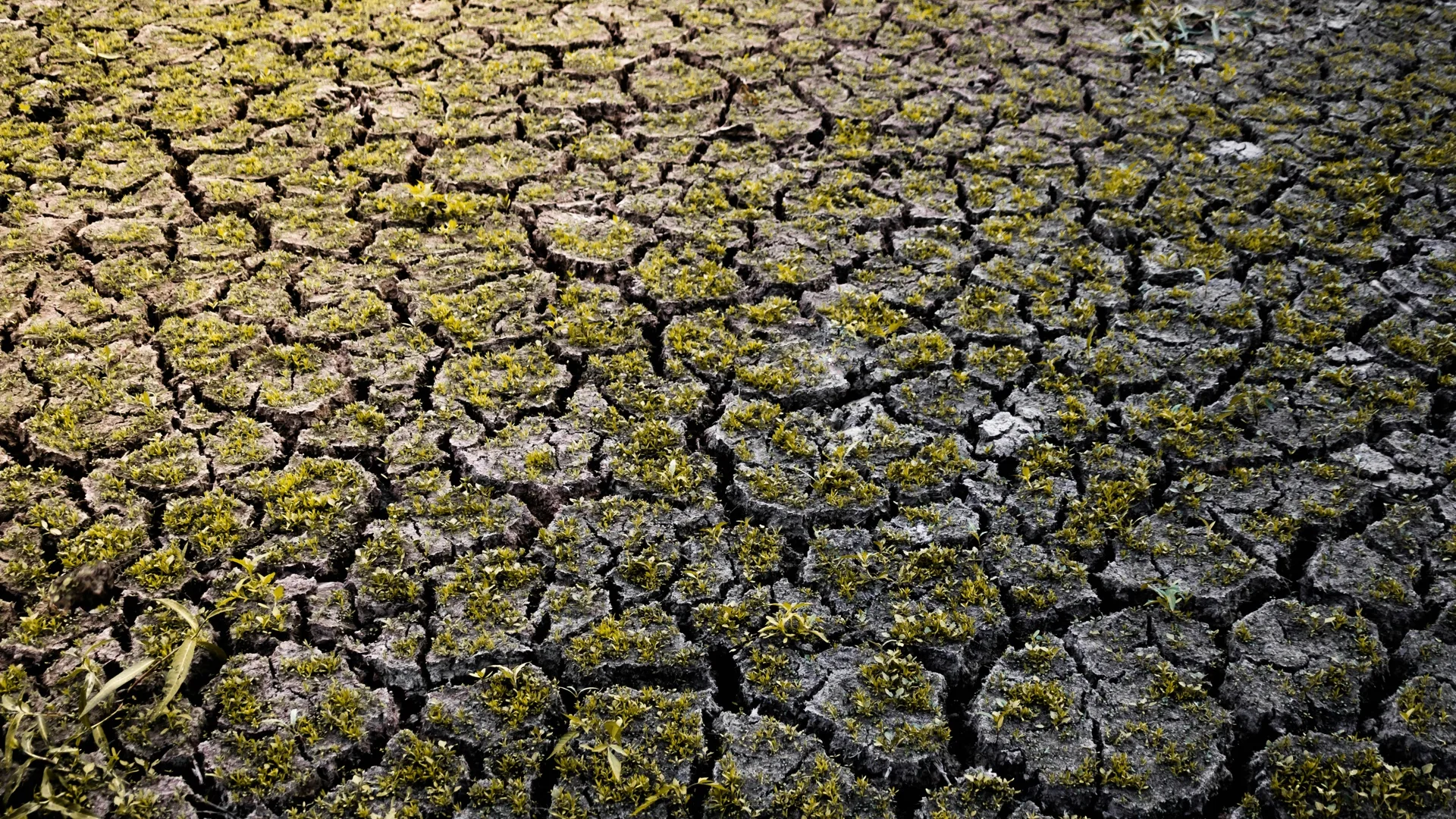
    As droughts, floods, sea-level rise, and other climate change induced phenomena are substantially threatening lives and livelihoods, forcing many to abandon their homes, despite the global dimension of these increasing phenomena, international legal instruments remain insufficient to deal with environmental migration, leaving those affected under insecure circumstances, and many unresolved issues.

    In an attempt at clarification on this complex problem, this paper discusses the difficulties surrounding climate-induced migration in international law and explains why the term “climate refugee” is not yet accurate or legally recognized. The case study of Ioane Teitiota v. New Zealand is used to show how these theoretical challenges affect individuals in practice.

    The paper concludes by exploring alternative approaches that move beyond existing legal frameworks, suggesting a shift toward integrating migration into climate adaptation strategies.

    It suggests that such efforts could be supported through adaptation funding and strengthened by emerging international legal developments, including the pending advisory opinion of the International Court of Justice on the human right to a clean, healthy, and sustainable environment.

    Learn more about this study here: https://doi.org/10.25365/vlr-2023-7-1-94


    Reference

    Karnicar, Carina (2023), “Climate Change and Migration
    Climate Change Induced Migration in International Law and the Human Right to a Sustainable Environment”, University of Vienna Law Review, Vol. 7 No. 1 (2023)

  • Migration, Climate Change, and Voluntariness

    Migration, Climate Change, and Voluntariness

    Climate change challenges the means of subsistence for many, particularly in the Global South. To respond to the challenges of climate change, governments increasingly resort to resettling those most affected by land erosion, heat, drought, floods, and the like.

    In this article, the author investigates to what extent resettlement can compensate for the harm that climate-induced migration brings, and questions whether such measures can address the deeper ethical consequences of displacement.

    What are designated as three central harms are identified. First, climate change alters people’s options to such an extent that migration can no longer be considered fully voluntary and may even become coercive. Second, climate-induced migration severs individuals’ ties to territory, which are constitutive for personal autonomy. Third, the loss of traditional and historical lands undermines people’s capacity to imagine a future.

    It is concluded that although resettlement may improve material well-being and human flourishing, it cannot fully compensate for the harm done to individual autonomy, even when relocation is planned and chosen.

    Learn more about this study here: https://doi.org/10.1017/S0892679423000412


    Reference

    Straehle, C. (2023). Migration, Climate Change, and Voluntariness. Ethics & International Affairs, 37(4), 452–469

  • Climate Migration: A Gendered Perspective

    Climate Migration: A Gendered Perspective

    This article examines climate-induced migration through a gender-sensitive perspective, drawing attention to how pre-existing social, economic, and environmental vulnerabilities create a greater likelihood of being forced to move due to the impacts of climate change.

    This can be particularly true for women and girls who face intersectional and structural discrimination, which shapes their resilience, adaptation, and migration experiences.

    This gender dimension remains largely overlooked in research, data collection, and legal frameworks on climate change migration. The lack of gender-sensitive statistics and legal protections contributes to ongoing invisibility, vulnerability, and inadequate protection for affected populations.

    Therefore, the author analyzes the potential, recent developments, and limitations of international legal frameworks in addressing climate migration from a gender-responsive perspective, emphasizing the need to integrate gender considerations into protection mechanisms for climate migrants.

    Learn more about this study here: https://doi.org/10.3233/EPL-239008


    Reference

    Borràs-Pentinat, S. (2023). Climate Migration: A Gendered Perspective. Environmental Policy and Law, 53(5-6), 385-399

  • Climate Change, Vulnerabilities, and Migration: Insights from Ecological Migrants in Bangladesh

    Climate Change, Vulnerabilities, and Migration: Insights from Ecological Migrants in Bangladesh

    This study examines the interaction between environmental hazards and non-environmental factors that drive migration, augmented by the struggles they face and their urban survival strategies.

    It focuses on Aila-induced migrants living in a slum in Khulna city, challenging the idea that environmental hazards alone explain migration from coastal areas.

    Instead, it asserts that migration results from a convergence of multiple factors, like environmental stress, socio-political and economic vulnerabilities, and proximity to ecologically fragile regions. Although initially driven by subsistence needs, migration becomes a longer-term strategy for many marginalized individuals.

    It is also emphasized how migrants form strong place-based networks that support their adaptation to urban life and help them cope with urban challenges, as well as the complexity of climate-induced migration and the need for comprehensive and context-sensitive policy responses.

    Learn more about this study here: https://doi.org/10.1177/10704965231211589


    Reference

    Uddin, M. J. (2023). Climate Change, Vulnerabilities, and Migration: Insights from Ecological Migrants in Bangladesh. The Journal of Environment & Development, 33(1), 50-74

  • Climate Change and the Public Health Imperative for Supporting Migration as Adaptation

    Climate Change and the Public Health Imperative for Supporting Migration as Adaptation

    As human mobility has reached unprecedented levels in an era of accelerating global climate change, it is acknowledged that many cases of human migration in the context of climate change are forced or involuntary, particularly where adaptation measures have failed to achieve sufficient resiliency of communities against disasters.

    There are also many cases where migration is, itself, a voluntary adaptive measure to secure otherwise unattainable physical safety and life-sustaining resources.

    But, although climate migration is often approached as a human rights issue, it is noted that the public health community has been less unified and vocal on the topic.

    This paper, developed by the World Federation of Public Health Associations’ Environmental Health Working Group, seeks to address this gap by analyzing adaptive climate migration through a public health lens.

    The authors argue that creating an enabling environment for adaptive climate migration is not only a human rights imperative but also a public health necessity. They support this claim by showing how such environments can strengthen core public health services and functions, as outlined in the Global Charter for the Public’s Health.

    Learn more about this study here: https://doi.org/10.1016/j.jmh.2023.100174


    Reference

    Marcus, H., Hanna, L., Tait, P., Stone, S., Wannous, C., & A product of the World Federation of Public Health Associations Environmental Health Working Group (2023). Climate change and the public health imperative for supporting migration as adaptation. Journal of migration and health, 7, 100174

  • Migration and Climate Change – The Role of Social Protection

    Migration and Climate Change – The Role of Social Protection

    Social protection as a tool for supporting climate-vulnerable populations by reducing livelihood risks and smoothing consumption is examined in this systematic review.

    Drawing on 28 studies, it analyzes how social protection influences migration decisions, experiences, and outcomes in the context of climate change through mechanisms such as cash transfers, public works programs, insurance, and health care.

    Three key ways in which social protection policies are linked to climate-related migration are identified: social protection can ease financial barriers to migration as a strategy to manage climate risks, address adverse drivers that may force maladaptive or distress migration, and support those who remain behind in maintaining their livelihoods.

    Results highlight the potential of social protection to encourage more positive climate-migration outcomes for policymakers, practitioners, and affected communities.

    At the same time, the authors notice important knowledge gaps regarding how social protection can best support vulnerable groups. and further empirical research is called for, especially for the inclusion of social protection in climate and migration policy debates, to support voluntary and planned migration when long-term adaptation is no longer viable.

    Learn more about this review here: https://doi.org/10.1016/j.crm.2022.100472


    Reference

    Silchenko, D., & Murray, U. (2023). Migration and climate change – The role of social protection. Climate Risk Management, 39, 100472

  • The Future is Now: Climate Displacement and Human Rights Obligations — A Note on Recent Developments in the UN Human Rights Committee

    The Future is Now: Climate Displacement and Human Rights Obligations — A Note on Recent Developments in the UN Human Rights Committee

    Although climate-related litigation has been a growing global concern, the author of this paper notices that climate mobility in itself has seldom been the subject of relevant case law.

    Only human rights bodies in particular have begun to make progress in legal developments in the sphere of climate mobility.

    In this paper, a 2022 determination by the UN Human Rights Committee is examined, which concerns the habitability of a small island setting – Australia’s Torres Strait Islands – under climate change conditions and the legal responsibilities of nation states to abide by their international human rights obligations in implementing timely adaptation measures, which could help to ensure continued habitation.

    Learn more about this paper here: https://doi.org/10.3389/fclim.2022.1061474


    Reference

    Thornton F (2022) The future is now: Climate displacement and human rights obligations—a note on recent developments in the UN Human Rights Committee. Front. Clim. 4:1061474

  • A Systematic Review of Climate Migration Research: Gaps in Existing Literature

    A Systematic Review of Climate Migration Research: Gaps in Existing Literature

    In this literature review, an analysis is made of how climate-induced migration is framed in academic literature, and key research gaps are identified.

    For this purpose, a systematic review was done of 161 journal articles published between 1990 and 2019.

    Results reveal diverse discourses focusing on policy, climate vulnerability, adaptation, resilience, conflict, security, and environmental issues. Asia emerges as the most studied region, followed by Oceania, indicating a strong research focus on tropical and subtropical areas.

    The authors note that climate – induced migration affects livelihoods, socio – economic conditions, culture, security, and health, but that little is known about the livelihood outcomes of climate migrants in international destinations and their impacts on host communities.

    They conclude by proposing a research agenda and emphasizing the urgent need for coordinated global and national policies to address climate-induced migration as a major global challenge.

    Learn more about this review here: https://doi.org/10.1007/s43545-022-00341-8


    Reference

    Ghosh, R.C., Orchiston, C. A systematic review of climate migration research: gaps in existing literature. SN Soc Sci 2, 47 (2022)

  • Climate Change, Inequality, and Human Migration

    Climate Change, Inequality, and Human Migration

    This paper investigates the long-term effects of climate change on global migration and inequality, having the authors modeled the impact of climate change on productivity and utility in a dynamic general equilibrium framework.

    By endogenizing migration decisions across millions of spatial cells, the study captures the scale and structure of climate-induced migration across regions and education groups.

    Study findings show that climate change intensifies global inequality and poverty, reinforces urbanization, and increases migration from low- to high-latitude areas. Median projections suggest that global warming could lead to the voluntary and forced permanent relocation of around 62 million working-age individuals during the 21st century.

    Overall, it is concluded that under current international migration policies, only a small share of those affected are able to move beyond their home countries, and that while massive international migration is unlikely under most scenarios, climate-driven poverty poses a major global threat.

    Learn more about this study here: https://doi.org/10.1093/jeea/jvab054


    Reference

    Michał Burzyński, Christoph Deuster, Frédéric Docquier, Jaime de Melo, Climate Change, Inequality, and Human Migration, Journal of the European Economic Association, Volume 20, Issue 3, June 2022, Pages 1145–1197

  • A Global Child Health Perspective on Climate Change, Migration and Human Rights

    A Global Child Health Perspective on Climate Change, Migration and Human Rights

    The growing impacts of anthropogenic climate change on human displacement and child health are vast, and the need for immediate collaborative action and policy change to reduce carbon emissions is imperative.

    Climate-related disasters and extreme weather events are already disrupting livelihoods, economies, population health, and human rights, creating large-scale migration and displacement crises with serious consequences for children.

    Displacement and migration, both within and across national borders, have significant physical and mental health effects on children, who are particularly vulnerable due to their developmental immaturity and dependence on others for safety and resources. Although they bear little responsibility for the climate crisis, children face some of its most severe consequences, raising concerns about social and intergenerational injustice.

    In this paper, the role of pediatric health care providers in caring for displaced children and advocating for those most at risk is emphasized.

    It offers a global perspective on climate change, including how its impacts reflect and reinforce colonial legacies, and provides practical action steps for clinicians in the United States and for those advocating for children’s health worldwide.

    Learn more about this paper here: https://doi.org/10.1016/j.cppeds.2021.101029


    Reference

    Uddin, R., Philipsborn, R., Smith, D., Mutic, A., & Thompson, L. M. (2021). A global child health perspective on climate change, migration and human rights. Climate Change and Children, 51(6), 101029